How Mobile Addiction is Spoiling the Future of the Younger Generation
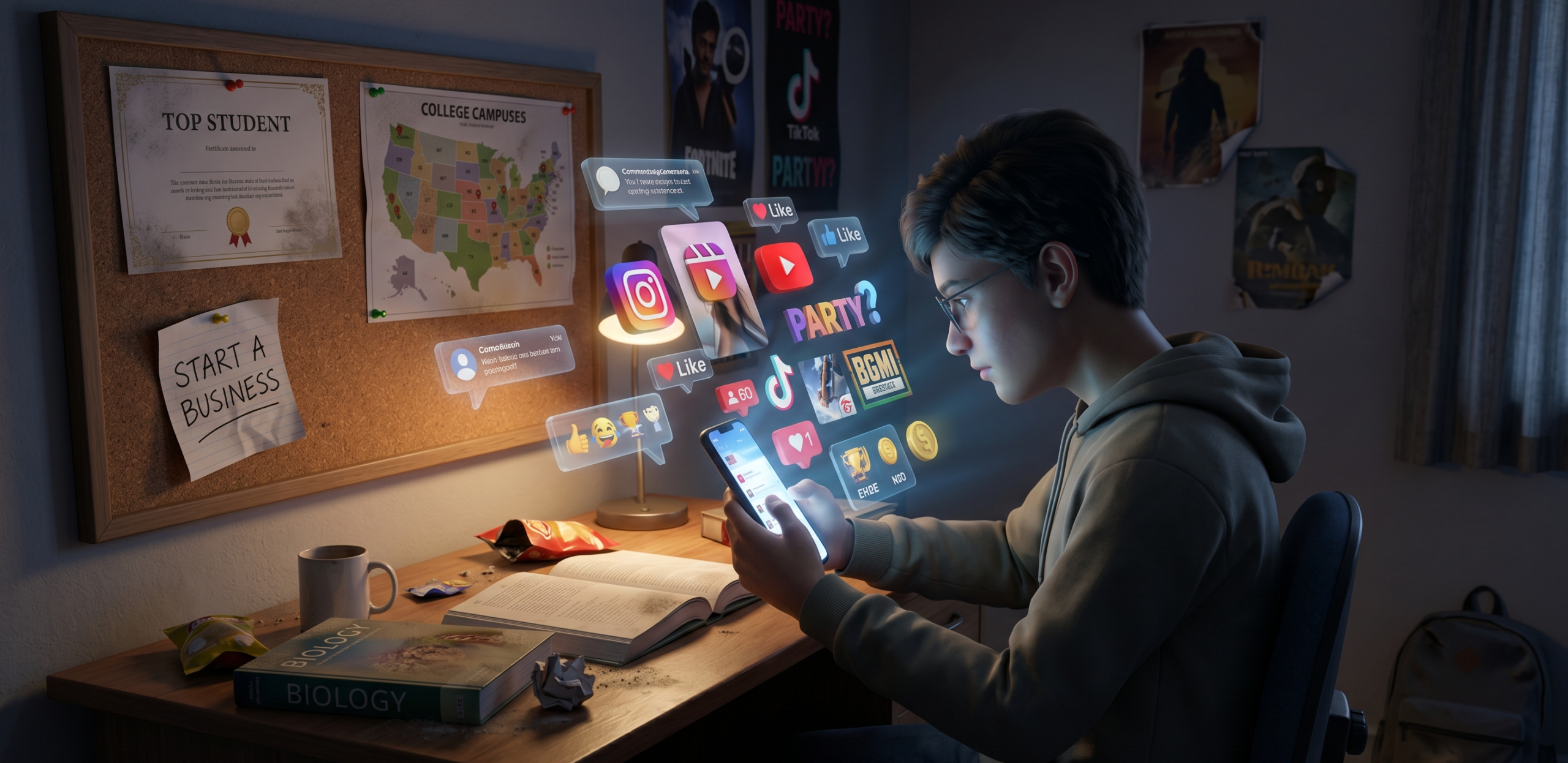
In today’s hyper-connected world, the smartphone has evolved from a mere communication tool into an integral digital extension of the human body. While technology has brought unprecedented convenience, an alarming trend has also emerged: an intense addiction to mobile screens among the younger generation. This growing dependency is altering brain structure and function, transforming patterns of social interaction, and threatening to compromise their future prospects. This report highlights the harsh reality of mobile addiction, presenting scientific data alongside real-world examples that underscore the urgent need to address this digital epidemic.
Phones are like a body part now. Phones were just used for calling people in the past. But today, we are so connected to the internet that a smartphone feels like an actual part of our body. We can’t imagine living without it even for a minute.
Technology has made our lives super easy. But there is a scary problem coming up for today’s youth. Who are badly addicted to looking at their mobile screens all day. It is ruining their minds and social lives. Because they are always glued to their phones, it is literally changing how their brains work. They are forgetting how to sit and talk to people face-to-face, and this bad habit can spoil their careers and future life and also forgot how to respect their parents and elders.
In this report you will see the harsh reality of this mobile addiction. It uses actual science and real-life stories to prove that this phone addiction is spreading like a disease, and we need to take strict action to stop it right away.
Main Facts: The Impact of Mobile Addiction –
- Degradation of Attention Spans: – The constant consumption of short-form content trains the brain to expect instant gratification, making it increasingly difficult to focus on deep, meaningful tasks.
- The Reels Habit (Short-form content): When we continuously scroll through 15- to 60-second videos on Instagram, YouTube Shorts, or TikTok, we feed our brains a diet of ceaseless, fast-paced entertainment.
- Instant gratification or satisfaction: Whenever we swipe to watch a new video, our brain experiences an immediate sense of excitement or pleasure. Since we obtain this pleasure so quickly and without any effort, our brain develops a sort of “habituation” or a “spoiled” mindset. Consequently, in whatever we do, the brain begins to expect immediate results and rapid entertainment.
- Loss of Focus (Deep and Meaningful Work): Our brains have become accustomed to finding something new and exciting every 15 seconds; consequently, when we have to engage in tasks requiring patience, the brain begins to exhibit a sense of restlessness or irritation. This is why we feel restless when sitting down to study, read a book, or focus on office work, and—after just five minutes—subconsciously reach for the phone lying nearby.
Let’s consider a common, everyday example: Consuming ‘short-form content’—or short videos—can be compared to eating excessively spicy and unhealthy food (junk food) every day. If you regularly eat such food, ordinary, healthy home-cooked meals—like dal-bhat (lentils and rice)—will start to seem incredibly monotonous or bland to you. Similarly, our brains become so accustomed to the fast-paced, flashy content of short videos (or ‘spicy’ entertainment) that focusing on normal, slower-paced tasks begins to feel impossibly tedious and difficult.
A high school student can spend hours swiping through 15-second videos but struggles to read a single textbook chapter for 20 minutes without reaching for their phone.
- Severe Mental Health Toll (Anxiety & FOMO): – ‘Fear of Missing Out’ (FOMO) and the pressure to maintain a perfect online image increase rates of anxiety, depression, and a lack of self-confidence.
- Fear of Missing Out’ (FOMO): Imagine you are at home studying or working when you open Instagram or check a WhatsApp status. You see your friends dining at an upscale café, attending a lively musical event, or vacationing in Goa. Suddenly, you feel down. You start thinking, “Everyone else is enjoying life to the fullest except me; I am the one missing out on all the fun and excitement.” This constant mental stress and anxiety stemming from the feeling that others are living a better life than you is what is known as ‘FOMO’.
- The Pressure to maintain a perfect online persona: This is the stress of always having to look “tip-top” on the internet to impress society. It is the pressure a youngster feels to click 50 selfies just to post that one perfect photo with the right filter. People feel forced to show that they are always happy, wearing branded clothes, and living a luxury life—even if they are struggling, broke, or having a terrible day in reality. It is essentially wearing a “fake happy mask” for the world to see.
- Leading to anxiety, depression, and low self-esteem: When a youngster constantly compares their real everyday life with everyone else’s filtered and edited highlight reel, it destroys their peace of mind.
- Anxiety: Constant tension and overthinking (“Why didn’t my photo get enough likes?”, “Why wasn’t I invited to that party?”).
- Depression: Feeling deeply sad and hopeless because their life doesn’t look like the glamorous lives of influencers or peers.
- Low Self-Esteem: Losing self-confidence. They start thinking, “I am useless,” “I am a failure,” or “I am not good-looking enough,” simply because they can’t match the fake perfection they see on their screens.
Let’s consider a common example: A teenager gets very upset and loses focus on studies after seeing peers post pictures from a party they weren’t invited to, tying their self-worth to social media validation.
- Physical Posture and Vision Deterioration: – Prolonged screen time causes significant physical issues, including ‘tech neck’ (cervical spine stress), eye strain, and early onset myopia.
- Staring at a screen for extended periods: This simply means spending continuous hours staring at a mobile phone—whether it is endlessly scrolling through Instagram Reels, playing games like BGMI or Free Fire, or binge-watching shows.
- “Tech neck” (strain on the cervical spine or neck vertebrae): Consider the posture we typically adopt while looking at our phones. We often sit with our heads tilted sharply downwards, towards our chests. The human head is quite heavy; consequently, keeping it tilted forward for hours on end places immense strain on the cervical spine. Over time, this leads to issues such as severe neck pain, shoulder stiffness, and pain in the upper back. Many families in India report complaints of “cervical pain”—and for young people, the primary cause is precisely this “tech neck” posture.
- Eye Strain: When we stare at a screen, we forget to blink. Our eyes stay glued to the bright light, often in a dark room. This dries out the eyes, causing them to burn, itch, turn red, and water constantly. It also leads to heavy headaches at the end of the day.
- Early Onset Myopia: “Myopia” means near-sightedness (being unable to see things that are far away clearly). “Early onset” means it is happening at a much younger age than it used to. Because children are constantly looking at a screen just 6 inches away from their faces, their eyes lose the ability to focus on far-off objects. This is why we see so many young school kids wearing thick glasses (chashma) very early in life, often struggling to read the blackboard in class.
Let’s consider a common example: A middle schooler experiences chronic headaches and requires a stronger prescription for glasses after spending over 6 hours daily hunched over a mobile gaming app.
- Exposure to Cyberbullying and Toxicity: “Cyberbullying” is when someone uses the internet to harass, insult, or threaten another person. “Toxicity” refers to the extreme negativity and poison spread online. For a youngster, this could look like getting abusive comments on an Instagram photo, being mocked in a school WhatsApp group, or having someone spread nasty rumours or morphed pictures of them online.
- The anonymity of the internet: “Anonymity” means nobody knows who you are. On the internet, anyone can easily create a fake account or a fake ID without their real name or photo. Because these trolls can hide their faces, they feel powerful. They type the most disgusting and hurtful things that they would never have the courage to say to someone’s face in real life.
- Follows them directly into their bedrooms, offering no safe haven: This is the most dangerous part. Ten or fifteen years ago, if a child was bullied in the school playground or at a tuition class, they could come home, shut the door, and feel safe. Home was a “safe haven” (a place of total safety and peace). But today, the bully is inside their smartphone. Even when the youngster is lying alone in their bed at midnight, their phone can buzz with a hateful message or a threatening DM. There is no escape, and there is no place left to hide.
Let’s consider a common example: A teenager fell drastically behind in their studies and completely refused to go to school after receiving anonymous, hateful comments on a viral post.
- Impulsive Financial Decisions (Reckless Spending): This means spending money on a sudden urge without thinking about the consequences. Because digital money (like UPI or saved credit cards) doesn’t feel like physical cash leaving your hand, youngsters often do not realize how much they are actually spending. They blow up money in a rush just to look cool in a game.
- Manipulative Mechanics: These are smart, hidden traps designed by app companies to get inside a user’s head. The games are literally built to make a child feel like they must buy something to win a match, progress to the next level, or impress their online friends.
- Loot Boxes (The Digital Lucky Draw): Imagine playing a popular game like BGMI, Free Fire, or Valorant. The game offers a “surprise box” or “crate” that you can buy for ₹500. The player buys it hoping to get a rare gun, a cool dance move, or a special outfit (called a “skin”). Most of the time, the box contains junk, so the player buys another box, and then another, chasing that rare item. It is essentially a form of digital gambling designed for kids.
- Seamless In-App Purchases: “Seamless” means without any hurdles or delays. Many times, a parent’s credit card or UPI is already linked to the Google Play Store or Apple App Store. Because of this, buying 1,000 virtual “diamonds” or “coins” takes just a single tap, a thumbprint, or Face ID. There is no time to stop and think, “Should I really spend this money?”
Let’s consider a common example: A teenager links their parent’s credit card to a mobile game and impulsively spends hundreds of dollars on virtual cosmetic items to impress online strangers.
Conclusion
The future of the younger generation relies heavily on their ability to navigate the digital world without being consumed by it. Mobile phones are powerful tools, but when they transform into an addiction, they drain ambition, focus, creativity, and mental well-being. To prevent technology from spoiling their potential, it is crucial to establish strict digital boundaries, encourage mindful consumption, and foster real-world connections. We must guide the youth to reclaim their time and attention, ensuring they control their screens, rather than letting their screens control them.
In One Short Sentence
“Smartphones have made life easy, but our youth are getting so addicted to screens that it is damaging their brains, ruining their social skills, and spoiling their future — and this report proves we need to fix it immediately.”